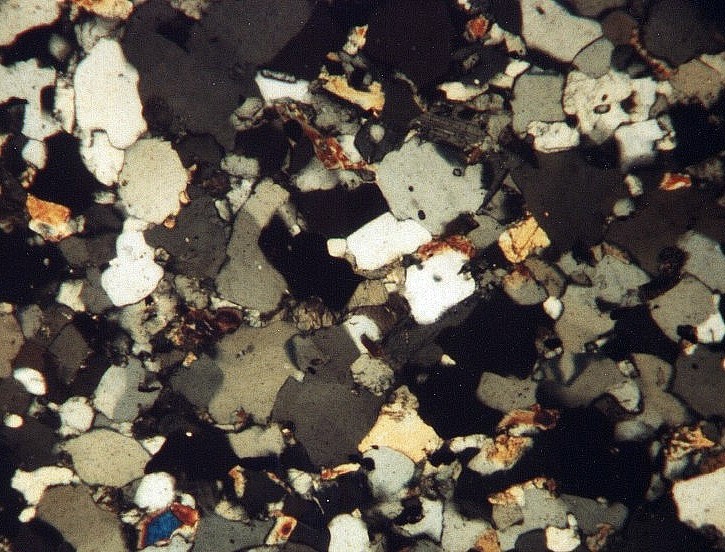


contact metamorphism
Contact metamorphism typically manifests as heat-induced metamorphic aureoles in the country rock surrounding intrusive igneous rocks (plutons).
The size of the metamorphic aureole depends on the temperature differential between the intrusive magma and the country rock, and on the size of the intrusion. Small intrusions, such as dykes typically have small aureoles with minimal metamorphism, whereas large ultramafic intrusions often display thick aureoles with well-developed contact metamorphism. Contact metamorphic rocks (hornfels) are often fine-grained and show little or no evidence of strong deformation.
The metamorphic grade of an aureole is that of the peak metamorphic mineral which has formed within the aureole – andalusite hornfels, sillimanite hornfels, or pyroxene hornfels. These grades relate to the metamorphic temperatures of pelitic or alumonisilicate rocks and the minerals that they form.
Magmatic fluids derived from the intrusive rock can impact metamorphic reactions, and extensive addition of magmatic fluids can significantly modify the chemistry of the affected rocks (metasomatism). Intrusions rich in carbonates produce skarns, fluorine-rich magmatic solutions often form greisens within granites. Metasomatic altered aureoles may include metallic ore minerals and are of economic interest.
Labels: aureole, contact metamorphism, greisens, hornfels, metallic ores, metasomatism, pelitic, skarns